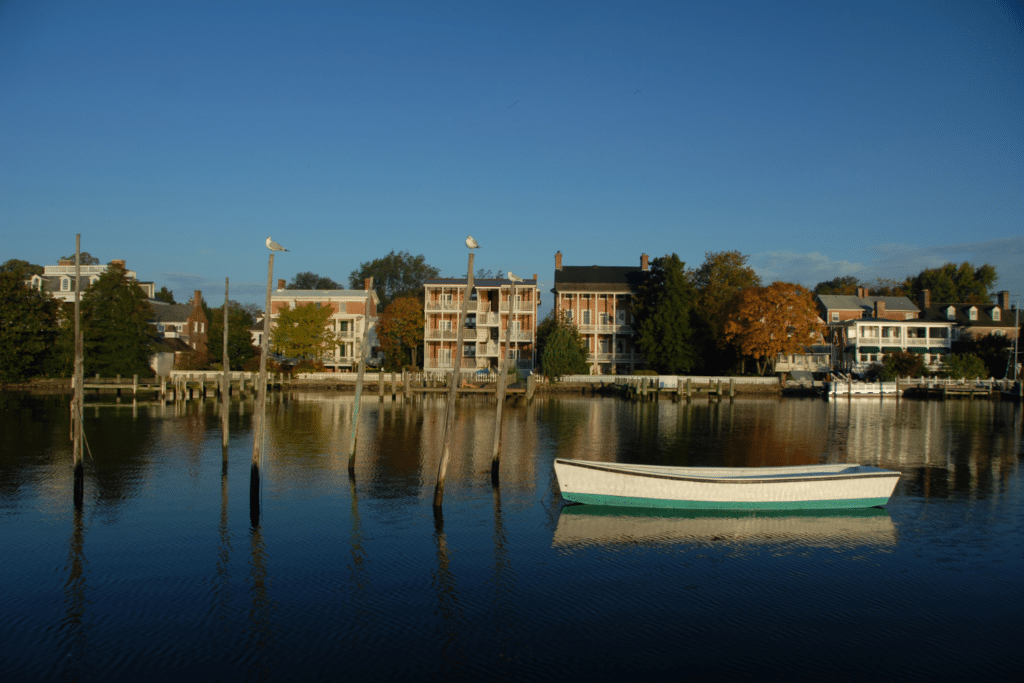
Most of what people mean by “old town Chestertown” is technically the Chestertown Historic District, a National Historic Landmark on the Chester River that’s been on the National Register of Historic Places since 1970. The original district covers much of the historic core near the Chester River, Cannon and Cross Streets, and Maple Avenue, with a 1984 boundary expansion to include more residential areas around Washington College. It holds an exceptional concentration of surviving 18th- and 19th-century buildings.
If you’re looking for the fuller picture of what to do in town, including where to eat, shop, and catch a farmers market, our complete guide to things to do in Chestertown, MD covers it all. This guide focuses on the historic district itself: the buildings, the walk, and the historic events.
Why Chestertown’s Historic District Is Different
Chestertown was laid out in 1706 and became a Port of Entry in 1708 for Cecil, Kent, and Queen Anne County. From roughly 1750 to 1790, it flourished as the chief tobacco and wheat shipping port on Maryland’s Eastern Shore. That prosperity is why the district has so many substantial Georgian and Federal-style homes, rather than the more modest vernacular buildings you’ll find in many Eastern Shore towns. As Chestertown’s shipping importance declined in the 19th century, much of its colonial and early Republic architecture remained.
The district was listed on the National Register of Historic Places and designated a National Historic Landmark District the same day in 1970, with a boundary increase in 1984 to include more of the residential blocks around Washington College. You’ll see a mix of styles as you walk it: Georgian and Federal along the waterfront, Greek Revival and Gothic Revival scattered through downtown, and Victorian, Queen Anne, and Shingle-style homes on the blocks that filled in later, into the early 1900s.
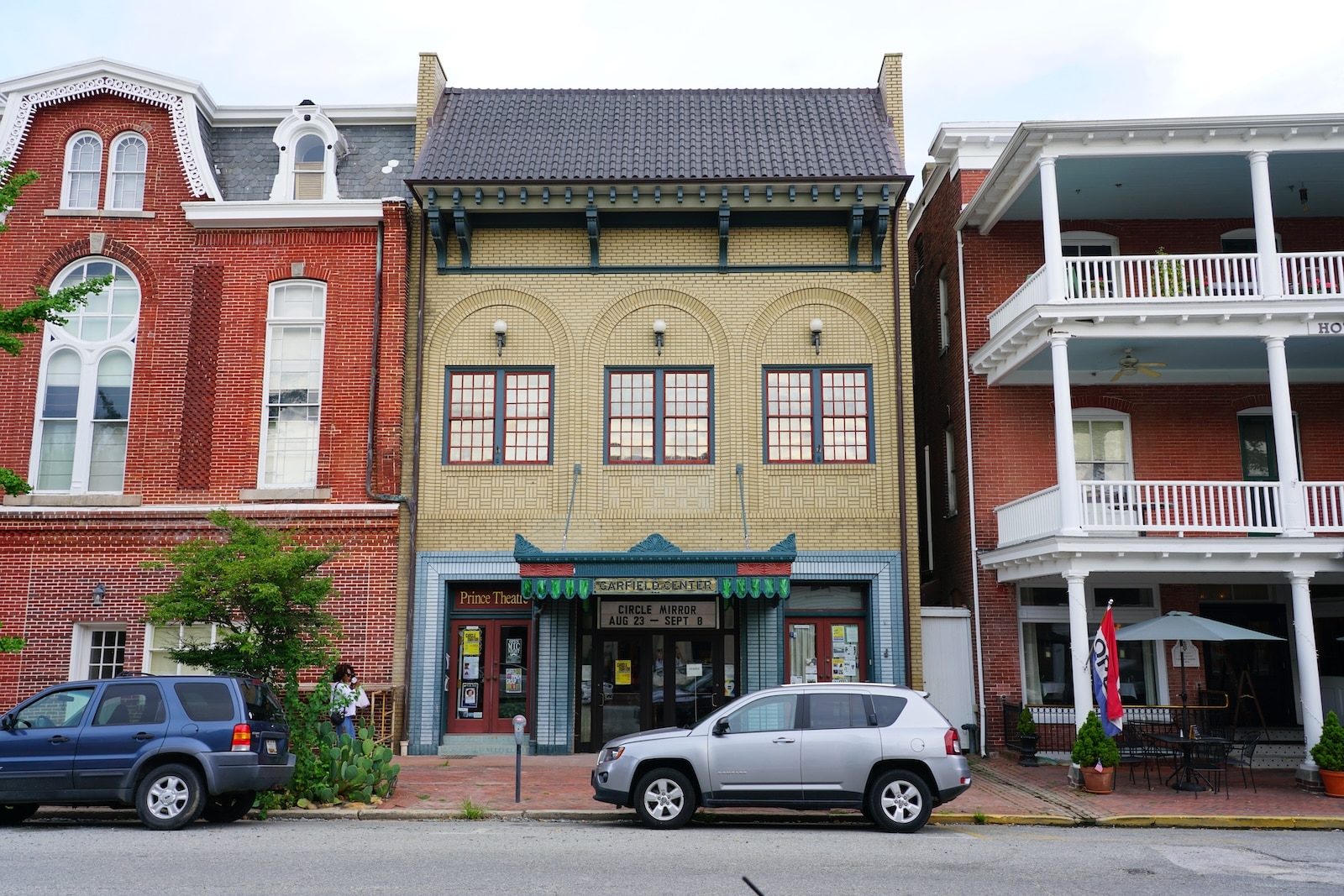
A Self-Guided Walking Tour of Chestertown, MD
A self-guided walk through the district takes you past dozens of buildings, but a handful are worth stopping in front of, if only just for their stories:
The Custom House, at 101 North Water Street, dates to 1746. Merchant Thomas Ringgold IV built it as his residence and place of business, and today it houses Washington College’s Starr Center for the Study of the American Experience. It sits right at the foot of High Street near the public dock.
Widehall, on Water Street, was built around 1770 by merchant Thomas Smythe and is one of the district’s finest individually listed Georgian homes, even though its exterior has been altered over the years.
River House, also known as the Denton House, at 107 North Water Street, dates to 1784. Its history and later alterations show how Chestertown’s historic homes changed over time while remaining part of the town’s architectural landscape.
The Hynson-Ringgold House, on South Water Street, has served as the official home of Washington College presidents since 1950 and is one of the finer examples of how the district’s private homes have stayed in continuous, practical use rather than becoming museum pieces.
The White Swan Tavern, across from the Garfield Center downtown, sits on a site archaeologists traced back to a shoemaker’s tannery operating before 1733, with a portion of that earlier structure still part of the building today.
Walk It Yourself
The Historical Society of Kent County maintains a self-guided walking tour brochure of the historic district. Originally produced in 1985 and expanded in 2024, the current tour includes 29 stops. You can pick up a brochure outside the Bordley History Center at 301 High Street, across from Fountain Park, seven days a week. The building also houses the Historical Society itself if you want more background before you set out.
Plan on 45 minutes to an hour for an unhurried walk if you’re mostly looking at exteriors. It takes longer if you stop into shops and galleries along the way. Start at Fountain Park, at the corner of High and Cross Streets, and work your way down High Street toward the water, then loop back along Water Street to take in the waterfront homes.
See Inside: Historic House Tours
Most of the homes in the district are private residences, so access to the interiors is limited. The Historical Society of Kent County and other local organizations occasionally offer ticketed tours that include historic properties, with participating homes and themes varying by event.
Chestertown’s annual A Dickens of a Christmas is a Victorian-themed holiday festival held each December, and its programming has included tours of historic downtown homes. When house tours are offered, tickets can sell out, so check the current festival schedule and book ahead if seeing inside the homes is a priority.
The Legend Behind the Name: Chestertown’s Own Tea Party
Every Memorial Day weekend, the historic district becomes the backdrop for the Chestertown Tea Party Festival, a three-day celebration with an interesting story reenactment. In May 1774, after word reached Chestertown that the port of Boston had been closed in retaliation for its own tea party, local residents drafted the “Chestertown Resolves,” a set of resolutions declaring it unlawful to buy, sell, or drink English tea. That part is documented fact.
The more dramatic part, that Chestertown patriots then boarded the brigantine Geddes and threw its cargo of tea into the Chester River, is local legend rather than verified history. No surviving contemporary letter, diary, or newspaper account from 1774 confirms that the tea-dumping event occurred. Historians generally treat it as a story that grew up around the very real Chestertown Resolves rather than an event with hard evidence behind it. Whether or not it happened exactly as told, the reenactment remains the centerpiece of the annual Memorial Day weekend festival and one of the best times of year to see the historic district full of life.

Getting Here and Planning Your Trip
The historic district sits entirely within walking distance of downtown parking. While you’re exploring on foot, you should also visit everything else downtown Chestertown has to offer, including the shops, restaurants, farmers market, and galleries, which we’ve covered in our full guide to things to do in Chestertown, MD. The town is about a twenty-minute drive from our property, Inn at Huntingfield Creek, in Rock Hall, MD. If you’re looking for more to explore, check out our first-timers guide to Kent County.
Stay at a Bed and Breakfast in Maryland Nearby
Make Chestertown part of a longer Eastern Shore getaway with a stay at our Bed and Breakfast in Maryland, located in Rock Hall on 70 acres near the Chesapeake Bay. Guests choose from five individually decorated guest rooms in the Main House or seven private cottages, with amenities ranging from king-size Tempur-Pedic-topped beds and private baths to fireplaces, bistro kitchens, and soaking tubs in select cottages.
Mornings begin with a full country breakfast featuring local fruit, farm-fresh eggs, premium breakfast meats, a changing sweet dish, sourdough toast, coffee, and tea. When you’re not exploring Chestertown, spend time walking the inn’s grounds, relaxing by the saltwater pool, or getting out on the water.
Book your stay at Inn at Huntingfield Creek and give yourself time to explore both Chestertown and Rock Hall.
Frequently Asked Questions
Is the Chestertown Tea Party a true story?
The historical record supports the Chestertown Resolves, the town’s documented 1774 protest against British tea policies. The dramatic tea-dumping event itself is local legend, with no surviving 18th-century record confirming that it happened.
Why is Chestertown’s historic district considered significant?
It contains an exceptional concentration of surviving 18th- and 19th-century buildings, reflecting Chestertown’s importance as a colonial and early American port.
How long does it take to walk the Chestertown Historic District?
Plan on 45 minutes to an hour for the exterior walk alone, and longer if you stop into shops, galleries, or the Historical Society along the way.
Can you go inside the historic homes in Chestertown?
Most are private residences, so interior access is generally limited to occasional ticketed house tours and special events. A Dickens of a Christmas has included historic home tours as part of its holiday programming.